Radical 13
| 冂 | ||
|---|---|---|
| ||
| 冂 (U+5182) "wide" | ||
| Pronunciations | ||
| Pinyin: | jiōng | |
| Bopomofo: | ㄐㄩㄥ | |
| Gwoyeu Romatzyh: | jiong | |
| Wade–Giles: | chiung1 | |
| Cantonese Yale: | gwing2 | |
| Jyutping: | gwing1 | |
| Pe̍h-ōe-jī: | keng | |
| Japanese Kana: | ケイ kē (on'yomi) | |
| Sino-Korean: | 경 gyeong | |
| Hán-Việt: | quynh | |
| Names | ||
| Chinese name(s): | 同字框 tóngzìkuàng | |
| Japanese name(s): | 冏構/けいがまえ kēgamae 牧構/まきがまえ makigamae 同構/どうがまえ dōgamae 円構/えんがまえ engamae | |
| Hangul: | 멀 meol | |
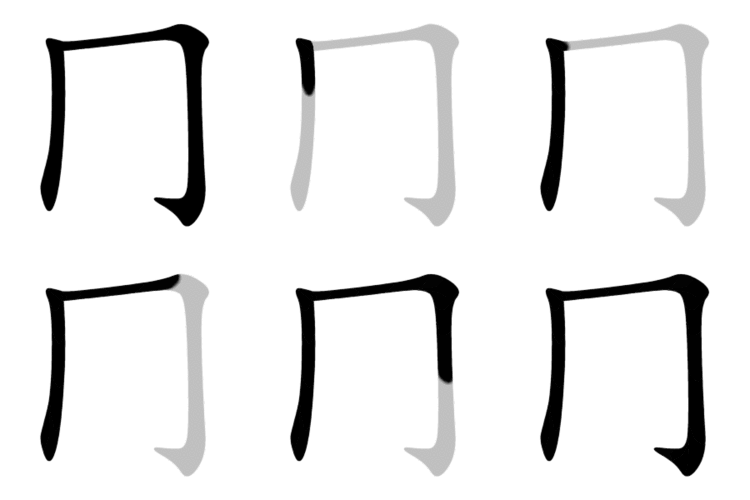
| Stroke order animation | ||
 | ||
Radical 13 or radical down box (冂部), meaning upside-down box or wide, is one of 23 of the 214 Kangxi radicals that are composed of 2 strokes.
In the Kangxi Dictionary, there are 50 characters (out of 49,030) to be found under this radical.
冂 is also the 10th indexing component in the Table of Indexing Chinese Character Components predominantly adopted by Simplified Chinese dictionaries published in mainland China.
Evolution
-
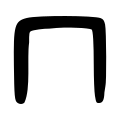 Bronze script character
 -
 Large seal script character
 -
 Small seal script character
Derived characters
| Strokes | Characters |
|---|---|
| +0 | 冂 |
| +2 | 冃 冄 (=冉) 内SC/JP (=內 -> 入) 円JP (=圓 -> 囗) 冇 冈 (SC form of 岡 -> 山 / ancient variant of 网 -> 网) |
| +3 | 冉 冊TC/JP/KO variant 冋 册SC variant (=冊) 囘 (=回 -> 囗) |
| +4 | 再 冎 |
| +5 | 冏 |
| +6 | 冐 |
| +7 | 冑 冒 |
| +8 | 冓 冔 |
| +9 | 冕 |
Literature
- Fazzioli, Edoardo (1987). Chinese calligraphy : from pictograph to ideogram : the history of 214 essential Chinese/Japanese characters. calligraphy by Rebecca Hon Ko. New York: Abbeville Press. ISBN 0-89659-774-1.
- Leyi Li: “Tracing the Roots of Chinese Characters: 500 Cases”. Beijing 1993, ISBN 978-7-5619-0204-2
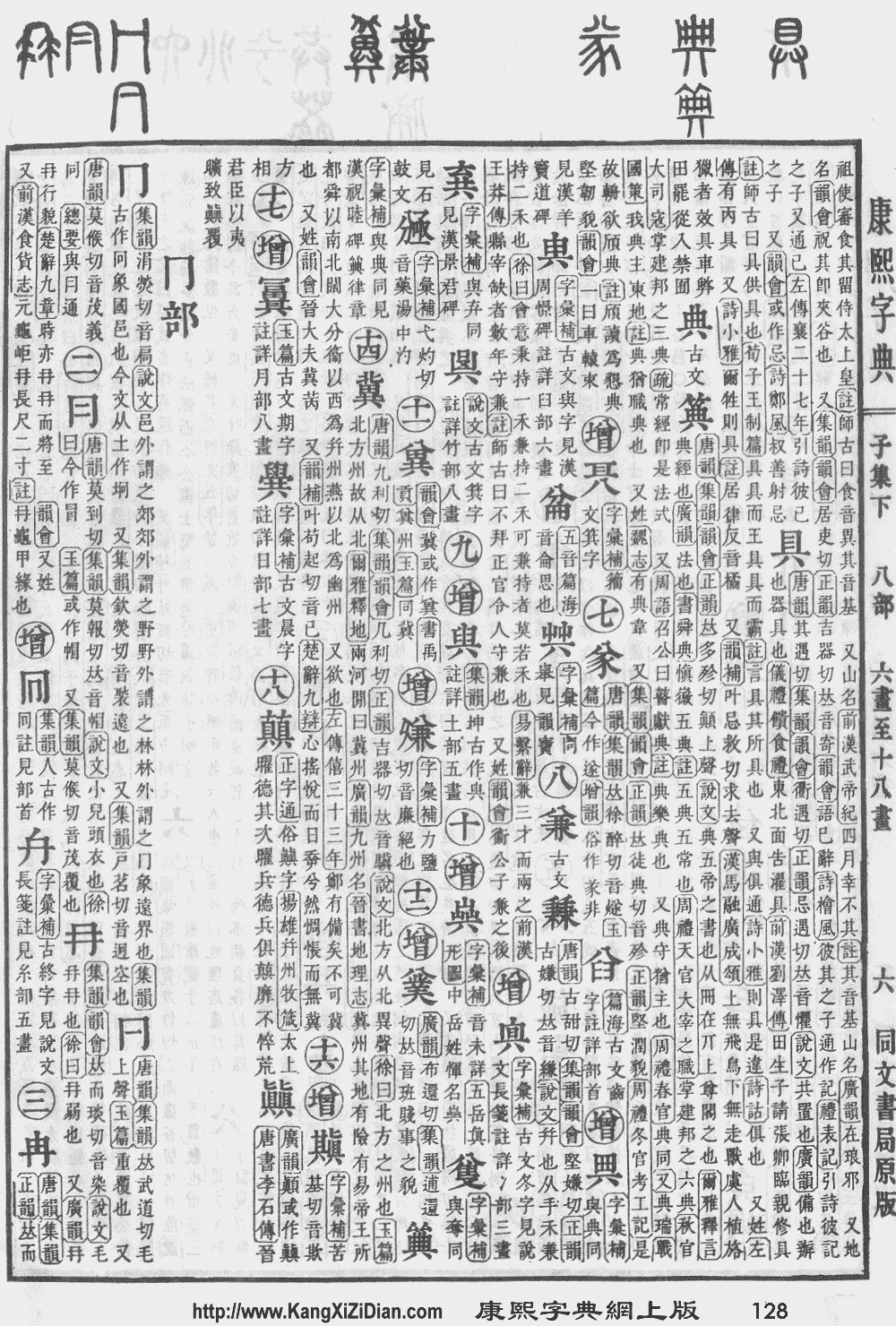
- KangXi: page 128, character 30
- Dai Kanwa Jiten: character 1506
- Dae Jaweon: page 289, character 9
- Hanyu Da Zidian: volume 1, page 96, character 13
External links

Wikimedia Commons has media related to Radical 013.
Simplified Chinese characters radicals (indexing components) | |
|---|---|
| 1 stroke | |
| 2 strokes | |
| 3 strokes | |
| 4 strokes | |
| 5 strokes | |
| 6 strokes | |
| 7 strokes | |
| 8 strokes | |
| 9 strokes | |
| 10 strokes | |
| 11 strokes | |
| 12 strokes | |
| 13 strokes | |
| 14 strokes |
|
| 17 strokes |
|
GF 0011-2009 Table of Indexing Chinese Character Components prescribes 201 principle indexing components and 100 associated indexing components (in brackets) used in Simplified Chinese. Not all associated indexing components are listed above. | |